

 Written by
(TAKE THE QUIZ AT THE END TO SCORE DISCOUNTS.)
In many ways, they all lead back to Voltaire.
The French writer, philosopher, and satirist became one of the most powerful voices of the Enlightenment. Through his sharp wit, fearless criticism, and relentless questioning of authority, Voltaire helped shape the modern ideas of freedom of thought, religious tolerance, individual rights, and reason.
He challenged kings.
He mocked hypocrisy.
He questioned traditions that others were afraid to challenge.
And he did much of his work with a cup of coffee close at hand.
In fact, Voltaire was famously known for his extraordinary coffee consumption, with some accounts claiming he drank dozens of cups a day while writing and debating ideas.
Whether the exact number has been exaggerated by history or not, one thing is clear:
Coffee and conversation were central to the intellectual world that Voltaire inhabited.
The Man Who Fought With a Pen
Born François-Marie Arouet in Paris, France, on November 21, 1694, Voltaire adopted his famous pen name as a young writer.
From an early age, his intelligence and sharp tongue made him both admired and controversial.
His writings criticized powerful institutions, particularly the abuses of government and religious intolerance.
His words often got him into trouble.
He was imprisoned in the Bastille, the infamous Parisian fortress prison, and later forced into exile in England.
But rather than silencing him, those experiences made him an even stronger advocate for liberty and free expression.
The Enlightenment and the Age of Reason
Voltaire lived during the Enlightenment, an intellectual movement that argued humanity could improve society through:
- reason
- science
- education
- skepticism
- open debate
He believed people should examine ideas rather than blindly accept them.
Question authority.
Demand evidence.
Use reason.
Those principles helped lay the groundwork for modern democratic societies.
The Enlightenment was not fought with armies alone.
It was fought with books, letters, conversations, and debates.
And very often, those debates happened over coffee.
The Coffeehouses That Changed the World
By the 1700s, coffeehouses had become the social networks of Europe.
Scientists exchanged discoveries.
Writers developed new ideas.
Merchants discussed commerce.
Philosophers debated politics.
A cup of coffee purchased more than a drink.
It purchased access to a world of ideas.
Voltaire himself was a regular visitor to Parisian cafés, where conversation, argument, and intellectual competition flourished.
You could say the modern internet was built on servers.
The Enlightenment was built on coffee tables.
Candide and the Art of Questioning Everything
Among Voltaire’s most famous works is Candide, a satirical novel that challenged the idea that we live in “the best of all possible worlds.”
Through humor and exaggeration, Voltaire exposed:
- blind optimism
- corruption
- cruelty
- superstition
- irrational thinking
His message was not that life was hopeless.
It was that humans have a responsibility to think, improve, and build a better world.
One of the most famous lessons from Candide is:
“We must cultivate our garden.”
In other words:
Improve what is within your reach.
Create something worthwhile.
Do the work.
Voltaire, Tolerance, and Freedom
Perhaps Voltaire’s greatest legacy was his defense of freedom of thought.
While the famous quote, “I disapprove of what you say, but I will defend to the death your right to say it,” was written later by his biographer Evelyn Beatrice Hall as a summary of his beliefs rather than by Voltaire himself, the idea captures his lifelong commitment to intellectual liberty.
He argued for:
- religious tolerance
- freedom of expression
- justice under the law
- the power of education
His writings influenced generations of thinkers and helped inspire political movements that reshaped Europe and the Americas.
Why Voltaire Still Matters
More than 250 years after his death in 1778, Voltaire’s voice still echoes through modern culture.
His influence can be seen in:
- free speech
- secular government
- human rights
- journalism
- satire
- scientific inquiry
In an age overflowing with information, his advice feels more relevant than ever:
Question what you hear.
Examine the evidence.
Think for yourself.
A Final Thought From the Coffee Cup
Voltaire believed that the greatest weapon humanity possesses is not a sword.
It is an idea.
A question.
A conversation.
A challenge to something everyone else assumes to be true.
That is why coffee has always belonged beside philosophy.
It brings strangers to the same table.
It starts arguments.
It inspires discoveries.
It fuels the writers, entrepreneurs, scientists, and dreamers who ask:
“What if the world could be different?”
Three hundred years later, the conversation continues.
And somewhere, a fresh cup of coffee is waiting. ☕
QUICK QUESTIONS: SCORE COFFEE DISCOUNTS.
Take a quiz now! Get shop discounts!
-
Product on sale
 Red, White and Blueberry – Premium Blueberry Blend (8 oz.)Original price was: $13.99.$12.99Current price is: $12.99.
 -
Product on sale
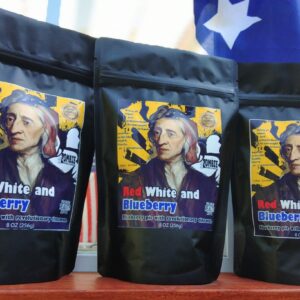 Red, White, and Blueberry Trio: Let Freedom and Flavor Ring! (3 pack of Blueberry 8 oz. each)Original price was: $38.99.$36.99Current price is: $36.99.
 -
Product on sale
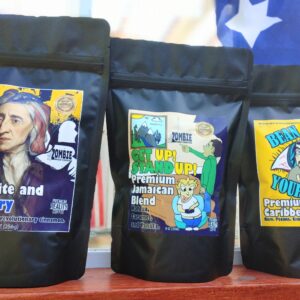 Independence Brew Trio: Savor the Freedom in Every Sip! (Blueberry, Jamaican, Caribbean) 8 oz.Original price was: $38.99.$36.99Current price is: $36.99.
 -
Product on sale
 Harvest Moon – Premium Pumpkin Spice Blend (8 oz.)Original price was: $13.99.$12.99Current price is: $12.99.
 -
Product on sale
 Bean In Your Eye – Premium Caribbean Blend (8 oz.)Original price was: $13.99.$12.99Current price is: $12.99.